
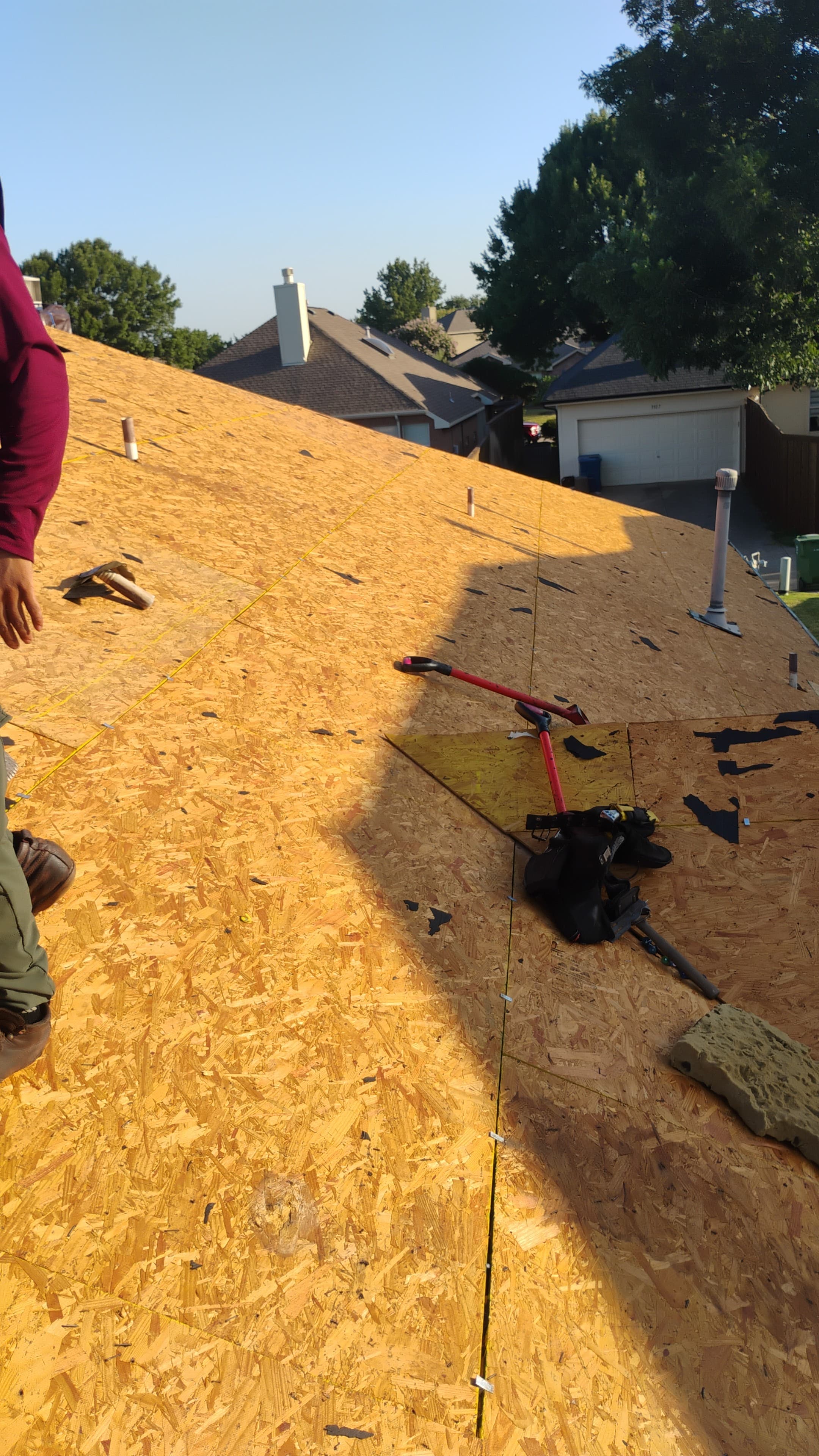
Roof Structural Inspection
Roof Sagging, Soft Spots or Structural Warning Signs in Dallas-Fort Worth
A sagging roof line or a soft spot underfoot is a sign that something beneath the surface is not right — usually prolonged moisture in the decking, sometimes structural movement. The visible dip is the symptom; the cause has to be determined by inspection. We assess what is happening below the surface and recommend the right path.
Veteran-Owned
U.S. Army Ranger founded
Licensed & Insured
DFW roofing since 1998
BBB A+
Accredited business
Honest Assessment
No pressure, no upsell
What You're Seeing
A visible dip, wave, or uneven area on the roof line from the street
A spot on the roof deck that feels soft or spongy when walked on
Roof decking that looks darker or stained from inside the attic
A sag that appeared or worsened after a storm or long-term leak
What May Be Causing It
Prolonged moisture in the decking
A slow, long-term leak saturates the roof deck and the wood loses strength. This is the most common cause of soft spots and localized sagging.
Deteriorated or rotted decking
Once moisture has been present long enough, the decking rots and can no longer hold its shape or fasteners.
Structural movement
Rafters or trusses can shift, settle, or weaken over time, producing a sag that is structural rather than moisture-related.
Overloaded or damaged roof sections
Heavy debris, repeated patching, or added weight beyond the original design can stress framing and decking.
Storm and long-term leak damage
Storm impact and long-undetected leaks both can compromise decking and framing, sometimes invisibly until a sag appears.
How Urgent Is This?
Sagging and soft spots warrant inspection because the underlying cause must be determined before any repair is planned. A soft deck can mean rotted wood that will not hold new shingles. A structural sag can mean framing that needs attention. This is not something to ignore or cover over — the cause has to be found.
What You Can Safely Do Now
From the ground, look for any visible dip, wave, or unevenness in the roof line.
Do not walk on a soft or sagging area — the deck may not support weight.
Check the attic for dark, stained, or soft decking and any moisture.
Schedule an inspection — the cause has to be determined before repair is planned.
What Not to Do
Do not walk on a soft spot — the deck may be rotted and unable to support weight.
Do not assume a small sag is cosmetic; it usually points to a problem below the surface.
Do not cover a soft deck with new shingles and expect a permanent fix — the rotted wood will not hold them.
Not Sure What Your Roof Needs?
An honest inspection tells you the real cause and the right next step — no pressure, no upsell.
What Roof Pros Dallas Inspects
The decking in the sagging or soft area for moisture, rot, and structural integrity
Rafters and trusses in the affected zone for movement or damage
The roof above the sag for the leak or impact that caused it
Ventilation and moisture conditions in the attic
Whether the sag is moisture-related, structural, or both
Possible Repair Paths
Decking replacement in rotted or soft areas before any new roofing goes on
Repair of the leak or impact source that caused the damage
Structural assessment and repair if rafters or trusses are involved
Full roof replacement when decking and shingle damage are widespread
When Replacement May — or May Not — Be Relevant
Sagging and soft spots often mean the decking needs replacement, and if the damage is widespread, full replacement is usually the right path — you cannot install new shingles over rotted decking. If the damage is localized, targeted deck and shingle repair may be enough. We assess the extent and recommend honestly.
Related Roofing System Considerations
Attic ventilation and moisture control matter — poor ventilation keeps decking wet and accelerates rot.
A long-undetected leak is usually behind soft decking — finding and stopping that leak is part of the repair.
Structural sags need a different repair path than moisture sags; the inspection determines which.
Dallas-Fort Worth Considerations
DFW homes with roofs in the 20-plus-year range, or with long-undetected slow leaks, are most prone to soft decking and sagging. North Texas heat and storm exposure both stress aging roof assemblies. A visible sag or a soft spot is a reason to inspect before planning any repair or replacement — the cause determines the right scope of work.
Roof Sagging & Soft Spots — Common Questions
Related Roofing Services
Roof Sagging & Soft Spots Across DFW
Select your area for roof sagging & soft spots help in your part of the Dallas-Fort Worth Metroplex.
Ready to Get Help?
Honest assessment, no pressure. We tell you what your roof actually needs.
Looking for a trusted roofing company? Read customer reviews for Roof Pros Dallas on Google.